2026-08-25 ·
SR22 Insurance Requirements In Vermont After A First Offense
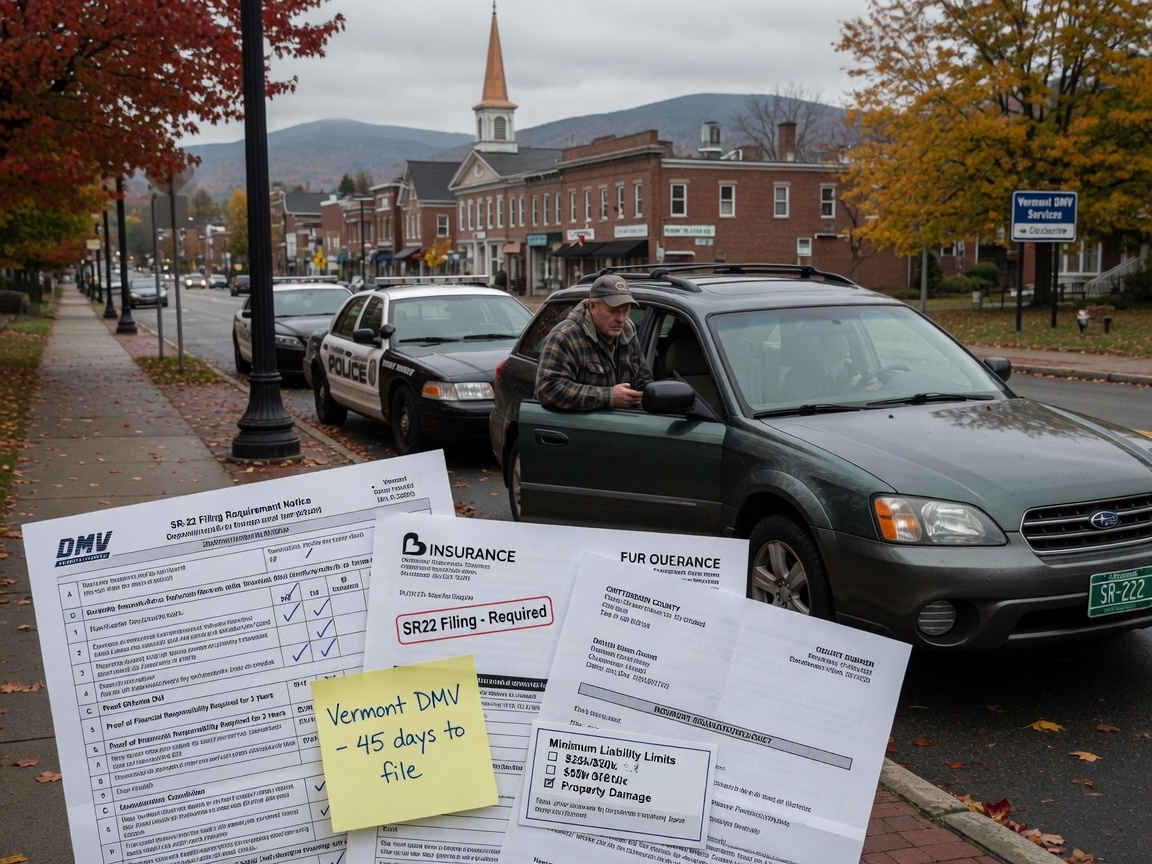
After a first offense such as DUI in Vermont, drivers must file an SR22 form with the DMV and maintain it for three years while carrying the state's minimum liability limits of 25/50/10. This filing proves financial responsibility to reinstate driving privileges in Burlington and surrounding towns.
Minimum Liability Requirements After Filing
Vermont law sets baseline coverage at $25,000 per person for bodily injury, $50,000 per accident, and $10,000 for property damage. In Chittenden County, where roads around the Old North End and Waterfront Park see heavy winter use, these limits help cover incidents on snow-covered streets near Lake Champlain. Drivers in the Hill Section or South End often face higher repair costs from collisions on narrow, hilly terrain, making the minimums a starting point rather than full protection. Continuous coverage prevents lapses that trigger DMV notifications during the three-year period. Cold snowy winters increase slide risks on untreated surfaces, so adequate liability shields against claims from incidents near Battery Park or the Burlington Bike Path.
How Vermont Winters Change Compliance Needs
Humid continental climate brings cold snowy winters that turn commutes on I-89 into high-risk drives for those under SR22 rules. In Burlington neighborhoods like the New North End and Lakeside, black ice forms quickly near the Ethan Allen Homestead access points, raising accident likelihood during the required filing window. Warm summers bring different hazards with increased traffic around Church Street Marketplace and Flynn Center events. Maintaining the SR22 through these seasonal shifts demands policy reviews each fall before snow arrives. Local drivers report that coverage gaps during December through March often stem from missed payments amid higher heating costs. SR22 Rules For Commuters On I-89 And Route 7 outlines route-specific adjustments that help meet DMV standards year-round.
Non-Owner Options for Burlington Residents
Some drivers in Downtown Burlington or Riverside lack a vehicle yet still need SR22 after an offense. Non-owner policies satisfy the filing requirement at lower premiums while covering borrowed or rented cars. This fits residents near Winooski or Essex who rely on public transit or rideshares during the three-year period. Policies must still meet the 25/50/10 minimums and remain active without interruption. Non Owner SR22 Insurance details how these plans integrate with standard auto requirements for those moving between Vermont towns.
Maintaining Coverage When Relocating Within the State
Moving from Burlington to South Burlington or Winooski requires notifying the insurer to keep the SR22 active with the DMV. Address changes must occur promptly to avoid filing lapses during the mandated three years. Terrain differences, such as steeper grades in parts of Essex, can influence premium calculations but not the core liability minimums. Transferring An Active SR22 When Moving Between Vermont Towns explains the steps that prevent compliance issues across Chittenden County lines. Consistent 24/7 access to policy support helps address these transitions immediately.
Checking Policy Status With Local Insurers
Drivers should request written confirmation of SR22 filing from their provider and retain copies for DMV audits. In areas like the Old North End, where older housing stock means limited off-street parking, vehicles face greater exposure to weather-related damage that could lead to claims. Regular reviews every six months catch rate changes tied to Vermont's variable summers and winters. Auto Insurance pages show how basic policies layer with SR22 filings to meet state rules without excess cost. This approach keeps coverage intact through the full requirement period.